India's cold water fisheries sector is being framed as a growing pillar of the Blue Economy. A PIB update from May 23, 2026 says the sector now supports livelihoods, nutrition, eco-tourism, biodiversity conservation, and sustainable mountain development. That is a meaningful shift. Cold water fisheries were once discussed mainly as traditional activity in Himalayan streams. They are now being connected to modern aquaculture infrastructure and rural enterprise.
The geography is specialised. Cold-water fisheries operate in high-altitude snow-fed rivers, streams, lakes, and reservoirs where temperatures usually sit between 5 and 25 degrees Celsius, dissolved oxygen is above 6 mg per litre, and pH levels stay between 6.5 and 8.0. Species such as rainbow trout, golden mahseer, and snow trout need this kind of ecological discipline. They cannot simply be scaled anywhere.
The source note says cold-water fisheries flourish across Jammu and Kashmir, Ladakh, Himachal Pradesh, Uttarakhand, Arunachal Pradesh, Sikkim, Meghalaya, Nagaland, and hill districts of West Bengal, Kerala, Karnataka, and Tamil Nadu. Together, these ecosystems cover more than 5.33 lakh square km of mountainous terrain. India has identified over 278 cold-water fish species, which makes the sector important for both production and conservation.
The production numbers are still modest compared with India's full fisheries economy, but they are no longer trivial. Total fish production reached about 197.75 lakh tonnes in 2024-25, while cold-water fisheries contributed nearly 3 percent of inland fish production. National cold-water fish production is around 7,000 metric tonnes, and trout production alone has risen nearly 1.8 times over the last decade to about 6,000 metric tonnes in 2024-25.
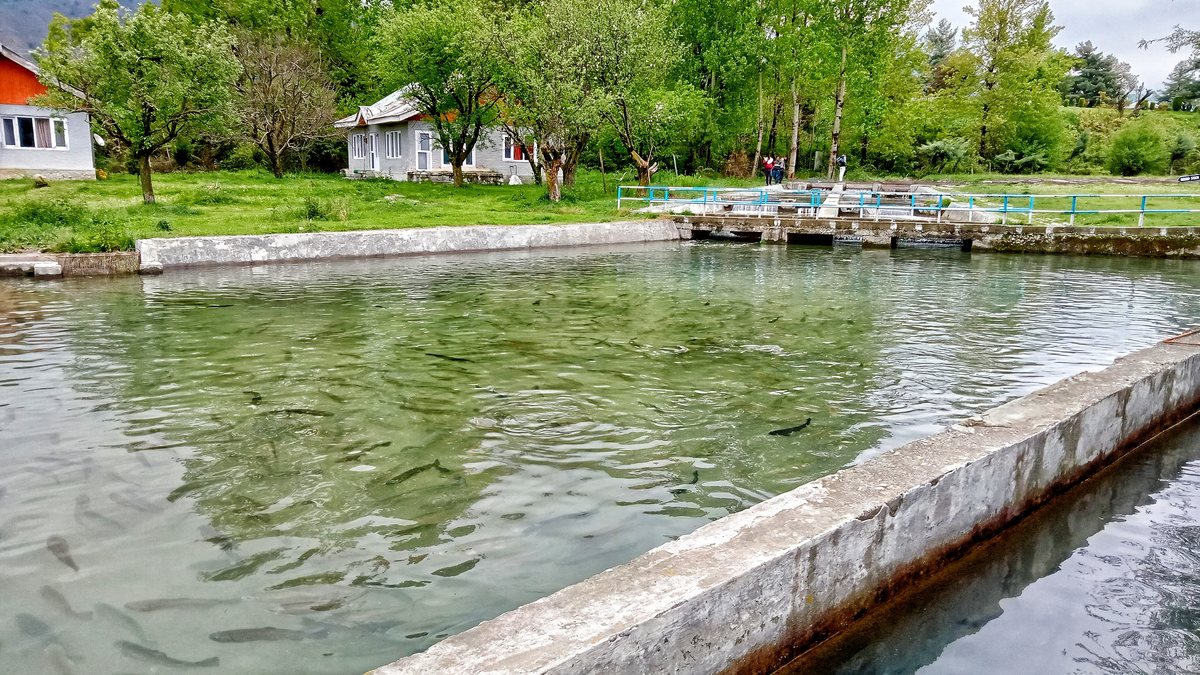
What makes this story interesting is the infrastructure layer. Hatcheries, raceways, recirculating aquaculture systems, biofloc systems, cold chain facilities, fish kiosks, transport vehicles, and integrated aqua parks are turning scattered activity into a value chain. The government note points to aqua parks at Anantnag, Udham Singh Nagar, Ziro, and Mokokchung, plus notified cold water fisheries clusters at Anantnag, Pithoragarh, Kullu, and Kargil.
For mountain communities, the economic logic is strong. Agriculture in high-altitude regions can be limited by climate, terrain, and market access. Fisheries can add a new income stream if seed supply, feed, disease management, cold transport, and local branding are reliable. Trout and other cold-water species can serve tourism markets, restaurants, urban consumers, and nutrition programmes.
The risk is that commercial growth could damage the very ecosystems that make the sector possible. Cold streams are sensitive. Poor waste handling, excessive stocking, disease spread, or careless infrastructure can hurt native biodiversity. That is why guidelines on hatchery standards, site selection, disease management, biosecurity, certification, and e-trading matter.
International collaboration with Norway and Iceland is also worth watching. Both countries have experience in cold-water aquaculture systems, hatchery management, and export strategy. India does not need to copy their models exactly, but knowledge transfer can help avoid mistakes in genetics, disease control, feed efficiency, and farm-level economics.
The next test is whether the sector can stay farmer-friendly. Capital-heavy systems can exclude small producers unless cooperatives, SHGs, startups, credit access, and insurance are designed carefully. If cold water fisheries become only a high-end niche, the rural development promise weakens. If cluster-based models bring small farmers into reliable markets, the sector can become a serious mountain livelihood engine.
Sources Checked
These links were used for fact checking and context. The article above is original analysis and summary.